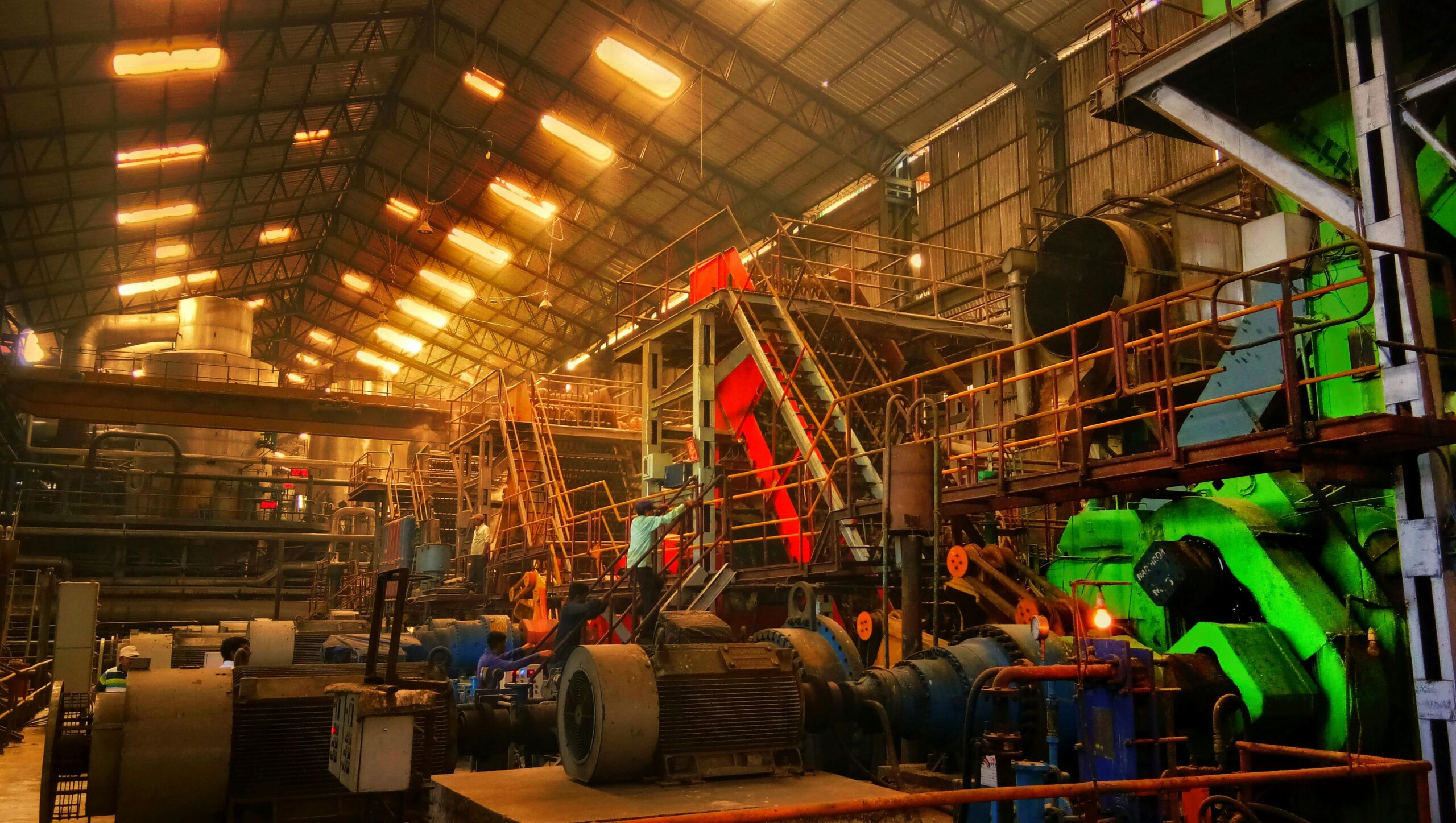
India’s ambition to build a domestic semiconductor industry has moved from aspiration to announced policy with remarkable speed. The government’s $10 billion semiconductor incentive scheme, launched in 2021 and revised in 2023, has attracted commitments from Micron Technology, Tata Electronics, and CG Power in partnership with Japan’s Renesas. The question is no longer whether New Delhi wants a chip industry — that political commitment is clear — but whether India possesses the industrial ecosystem, skilled workforce, and policy execution capacity to turn announced investments into operational fabs.
The Strategic Rationale
India’s semiconductor push is driven by converging strategic and economic imperatives. The COVID-19 pandemic exposed the vulnerability of India’s electronics manufacturing sector — which imports roughly $20 billion in semiconductors annually — to global supply chain disruptions. The government’s broader Production Linked Incentive (PLI) scheme, which has already catalyzed investment in mobile phone assembly and specialty chemicals, identified semiconductors as the highest-priority gap.
There is also a geopolitical dimension. As the United States, European Union, Japan, and South Korea invest in domestic chip production and build resilient allied supply chains, India sees an opportunity to position itself as a trusted alternative to China-linked manufacturing. The Council on Foreign Relations analysis of India’s semiconductor strategy notes that New Delhi’s alignment with U.S. supply chain security objectives has unlocked cooperation through the ICET (Initiative on Critical and Emerging Technologies) framework.
What Has Actually Been Committed
Micron’s $825 million investment in a semiconductor assembly, testing, marking, and packaging (ATMP) facility in Sanand, Gujarat — with 50 percent subsidy from the central government and additional support from Gujarat state — broke ground in 2023 and is the most advanced of the announced projects. Crucially, this is an ATMP facility, not a fabrication plant. Packaging and testing operations are the downstream, lower-technology end of the semiconductor value chain. They are valuable, but they do not give India the capacity to manufacture chips.
The more ambitious commitments involve actual fabrication. Tata Electronics and Taiwan’s Powerchip Semiconductor Manufacturing Corporation (PSMC) announced a joint venture for a 28nm fab in Dholera, Gujarat, with an investment of approximately $11 billion. Tata also announced a 28nm fab in Morigaon, Assam, through a partnership with CG Power and Renesas. These projects, if executed, would give India genuine wafer fabrication capability — though at process nodes that are trailing-edge by global standards, targeting power management, automotive, and industrial applications rather than advanced logic chips.
The Ecosystem Challenge
Semiconductor manufacturing is among the most complex industrial processes in existence. A modern fab requires ultra-pure water and chemicals, vibration-free facilities, humidity and particle control at levels that exceed typical industrial standards, and a workforce with highly specialized technical skills that takes years to develop. Taiwan built its semiconductor ecosystem over five decades of deliberate industrial policy, public-private investment in technical education, and close alignment between government research institutes and private companies.
India’s current industrial infrastructure presents real challenges. Power reliability — critical for fabs that cannot tolerate outages — remains inconsistent outside of major industrial zones. Water infrastructure in the designated semiconductor zones will require substantial investment. The supply of engineers with relevant process technology experience is limited; India produces large numbers of software engineers but relatively few with semiconductor manufacturing expertise.
The World Bank’s India country overview documents the infrastructure gaps that continue to constrain manufacturing competitiveness more broadly. Semiconductor fabs are among the most demanding manufacturing environments in existence, and the challenges that affect general manufacturing are amplified in this sector.
The Taiwan Connection
India’s semiconductor ambitions depend heavily on Taiwanese technology and expertise. The PSMC partnership brings process technology, equipment configurations, and engineering knowledge that India could not develop independently in the near term. This creates a strategic dependency that mirrors, in some respects, the global reliance on TSMC that has made Taiwan’s security a matter of global economic interest.
The relationship also creates sensitivity. Taiwan’s government has supported its companies’ overseas investments in the context of supply chain diversification, but TSMC — which operates the most advanced processes and is the crown jewel of Taiwan’s economic security — has maintained a cautious approach to overseas fab investments, prioritizing the United States, Japan, and Germany over India for its advanced node facilities. India is getting trailing-edge technology from a second-tier Taiwanese foundry, not a TSMC partnership. This reflects where India currently sits in the global semiconductor hierarchy.
This dynamic is part of the broader technology competition landscape analyzed in detail in our assessment of US-China technology decoupling, where supply chain realignment is creating openings that India is positioning to fill.
Execution Track Record
India’s record on large-scale industrial policy execution is mixed. The PLI scheme has produced genuine successes in mobile phone assembly — Apple has significantly expanded iPhone manufacturing in India through Foxconn and Tata — but has disappointed in sectors where domestic supply chains and technical capabilities were weaker. Semiconductor fab construction is orders of magnitude more complex than mobile phone assembly.
The government’s decision to approve projects in 2023 and accelerate subsidy disbursement reflects lessons from earlier rounds where slow approvals deterred investment. But construction timelines for fabs are long under the best conditions — typically three to four years from groundbreaking to initial production — and India has limited experience managing projects of this technical complexity. The Brookings research on India’s industrial policy provides useful context on where execution has succeeded and where it has fallen short.
Key Indicators to Watch
- Micron Sanand ATMP facility construction progress and first production timeline — the earliest indicator of India’s fab execution capacity
- Tata-PSMC Dholera fab groundbreaking and early construction milestones
- Government subsidy disbursement pace — delays would signal bureaucratic friction and deter further investment
- Power and water infrastructure investment in Dholera and Sanand industrial zones
- Semiconductor engineering enrollment and curriculum development at Indian technical institutes
- Any TSMC engagement with India — even a design center would be a significant signal
- Export volumes from Micron ATMP once operational — a commercial validation of the investment case
Bottom Line
India’s semiconductor program is real, strategically coherent, and backed by credible investment commitments. The critical distinction is between what India is actually building — primarily trailing-edge packaging and fabrication capacity — and the geopolitical narrative of India as a full-spectrum semiconductor alternative to China. The former is achievable; the latter is a decade or more away at minimum. Success depends not just on subsidy levels but on India’s ability to rapidly close infrastructure and workforce gaps that are currently binding constraints on its manufacturing ambitions.
Leave a Reply